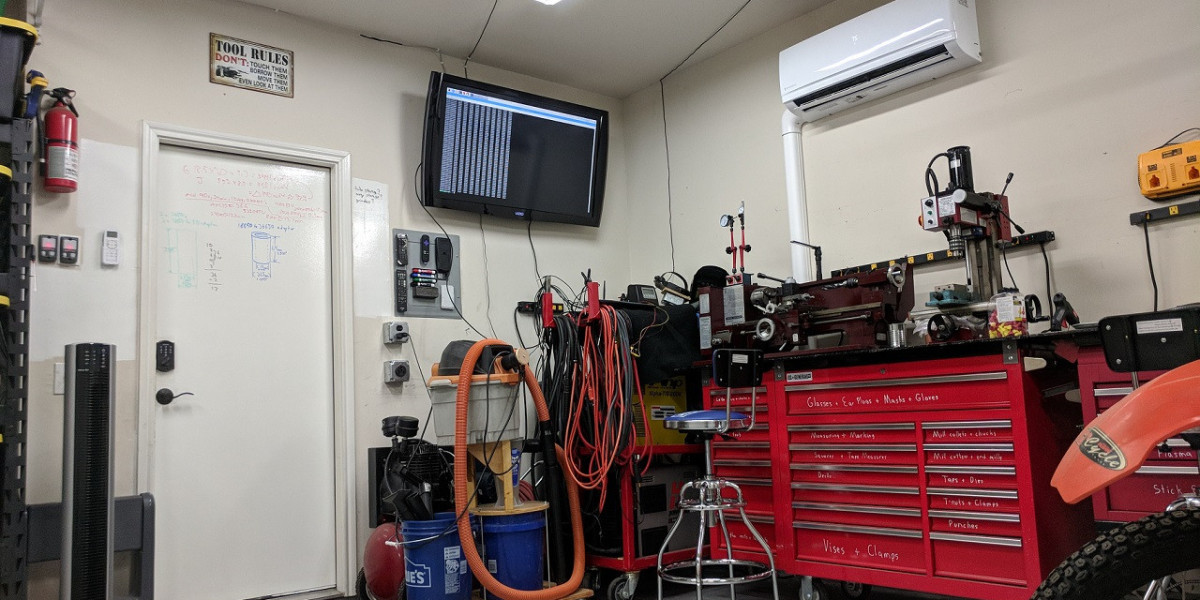

A ductless mini split system for garage is a self-contained heating and cooling unit that mounts on the garage wall and connects to a compact outdoor condenser through a small conduit. Because garages lack ductwork and are typically separated from the home's central HVAC system, mini splits offer the most efficient, flexible, and easy-to-install solution for year-round temperature control in these spaces.
Why Garages Need Their Own Climate Control System
Of all the spaces in a residential property, the garage may be the most consistently overlooked when it comes to climate control. Builders routinely design homes with fully conditioned interiors surrounded by extensive insulation and weather sealing, yet the attached garage is left to face the full extremes of every season with nothing but an uninsulated metal door, bare concrete floors, and whatever thin wall separates it from the living spaces. The result is a space that becomes a furnace in summer and a deep freeze in winter, and that thermal abuse flows directly into the connected home through shared walls and ceiling surfaces.
Transforming a garage from a marginal, season-limited storage space into a genuinely functional and comfortable room — whether as a workshop, home gym, hobby studio, home office, or entertainment area — requires solving the climate problem first. And while several heating and cooling options exist for garage spaces, a ductless mini split system for garage applications consistently emerges as the most capable, cost-effective, and practical solution available to homeowners today.
Challenges Unique to Heating and Cooling a Garage
The Thermal Envelope Problem
Standard residential garages are constructed with minimal consideration for thermal performance. The walls are often framed with 2x4 studs that provide barely enough depth for meaningful insulation, and many garages were built without any insulation at all in the walls or ceiling. The large garage door — which may represent 30 to 50 percent of the entire front wall surface — is typically made of metal or thin composite panels with R-values in the range of 1 to 3, compared to the R-13 to R-21 found in a well-insulated residential wall.
The concrete slab floor acts as a thermal battery, absorbing heat or cold from the ground below and releasing it slowly into the space above. In winter, a cold concrete floor can undermine a heating system's best efforts, as the slab continuously draws warmth from the air. In summer, afternoon sun beating on the garage roof can push interior temperatures 20 to 30 degrees above the outdoor ambient temperature, creating conditions that are genuinely dangerous for both people and stored items.
All of these factors mean that a garage HVAC system must be sized and selected with a realistic understanding of the space's poor thermal performance — and with the flexibility to operate efficiently across a wide range of indoor-to-outdoor temperature differentials.
Why Central HVAC Systems Cannot Serve Garages
The most obvious solution for a garage climate problem might seem to be extending the home's existing central HVAC system to include the garage. In practice, this approach almost never makes sense for several important reasons.
Building codes in most jurisdictions require that garages be thermally and structurally separated from living spaces because of fire and carbon monoxide hazards from vehicle exhaust and stored fuels. Many codes prohibit running return air ducts through garages entirely, and the codes that do allow supply air in garages require strict fire-rated separation to prevent combustion gases from entering the duct system and being distributed through the home.
Beyond the code issues, extending a central system to a poorly insulated garage would overwhelm the system's capacity calculations and reduce comfort throughout the rest of the home. The central system was designed to serve the home's conditioned living areas, and adding a large, thermally inefficient space to its load would cause it to run longer, work harder, and wear out sooner.
Why a Ductless Mini Split Is the Ideal Garage Solution
Independent Operation Without Ductwork
A ductless mini split system for garage use operates completely independently of the home's HVAC infrastructure. It has its own dedicated outdoor condenser, its own refrigerant circuit, and its own electrical circuit. When you activate it, it conditions the garage without drawing on any shared resources and without any of the fire separation complications that come with connecting the garage to the central system.
Because it requires no ductwork, installation is straightforward even in a fully finished garage. The indoor wall-mounted air handler requires only a small three-inch penetration through the garage wall for the conduit, and the outdoor condenser can be placed on a small concrete pad beside the garage or mounted on the exterior wall using bracket hardware. Compared to installing baseboard heaters, a through-wall AC unit, or a propane heater — all of which have significant limitations or safety concerns in a garage environment — the mini split stands apart in capability, safety, and long-term economics.
Heating and Cooling in a Single System
Propane or natural gas unit heaters are popular choices for garage heating in cold climates, and they are effective at their primary task. But they provide no cooling capability whatsoever, leaving the garage unbearable in summer. A window AC unit can cool a garage in summer but provides no winter heating. Portable electric heaters can take the edge off a cold garage but are inefficient and only practical for very limited areas.
A mini split ductless heat pump does all of it — heating, cooling, dehumidifying, and ventilating — within a single compact, permanently installed system. The same unit that keeps your workshop comfortable at 68°F on a January day will maintain that same temperature on a 95°F July afternoon. For garage spaces used year-round, the all-season versatility of a mini split is unmatched by any other heating or cooling option.
Energy Efficiency in a Space That Needs It Most
Given the poor insulation typical of garages, every unit of energy delivered to the space must work against higher thermal loads than it would in a well-insulated interior room. This makes efficiency especially valuable in a garage application. Mini split heat pumps are among the most efficient HVAC technologies available, delivering two to four units of heat energy for every unit of electricity consumed — a performance ratio that no electric resistance heater, gas-fired unit heater, or portable space heater can approach.
In practical terms, this means that a homeowner using a well-rated mini split to heat a 500-square-foot garage for several hours each day during a cold winter will pay significantly less per month than if they used electric baseboard or a portable space heater for the same comfort outcome. Over a full year of regular use, the energy savings can be substantial enough to meaningfully contribute to the payback of the system's installation cost.
How to Size a Mini Split for Your Garage
Starting With Square Footage
The sizing process for a garage mini split begins with the space's square footage, but garage applications require more conservative assumptions than standard interior room calculations because of the thermal challenges described above. While general residential guidelines suggest approximately 20 BTU per square foot for a normally insulated room, a poorly insulated garage often requires 25 to 30 BTU per square foot or more to achieve the same comfort outcome.
A standard two-car garage measuring 20 feet by 20 feet — 400 square feet — would require roughly 12,000 to 15,000 BTU based on these adjusted figures. A larger three-car garage at 600 square feet might need 18,000 to 24,000 BTU. And a garage workshop with heat-generating equipment like welders, table saws, or compressors will add to the cooling load, requiring further upward adjustment to the sizing calculation.
Insulation Upgrades That Change the Equation
Before finalizing the size of a mini split system for a garage, it is worth considering whether targeted insulation improvements could reduce the required system capacity. Adding an insulated garage door — rated at R-16 or higher — makes a measurable difference in both winter heat retention and summer heat gain. Insulating the garage ceiling with blown-in insulation or batt insulation between ceiling joists is often the highest-value improvement because heat stratifies and accumulates most intensely near the top of the space. Adding rigid foam insulation to concrete block walls or between wall studs before drywall can further improve the thermal envelope.
These improvements may allow you to install a smaller, less expensive mini split system while achieving better comfort than a larger system would provide in the unimproved space. Even modest insulation investments frequently yield returns in reduced equipment cost and ongoing energy savings that exceed the insulation cost within a few years.
Accounting for Special Use Cases
The intended use of the garage space is a critical factor in sizing. A garage used only for parking vehicles needs far less conditioning than one used as an active workshop where the homeowner spends several hours daily. A garage gym generates body heat from occupants and equipment that partially offsets heating needs but adds to cooling loads. A garage converted to a home office or living space needs to be conditioned to the same standard as interior living space, which may justify a more robustly sized system and certainly justifies investing in thorough insulation beforehand.
Step-by-Step Installation for a Garage Mini Split
Choosing the Best Location for the Indoor Unit
Mounting the indoor air handler on the correct wall in a garage is essential for effective air distribution. The best location is typically on an interior wall — the wall shared with the house — high enough to allow the unit to distribute conditioned air across the full width of the space. Mounting at seven to eight feet, just below the ceiling, allows the airflow pattern to sweep across the ceiling and down through the space in a manner that promotes even temperature distribution.
Avoid mounting the indoor unit directly above the garage door opening or on the wall with the garage door, as the constant movement of cold or hot outside air when the door is raised will create a persistent thermal challenge for the unit and dramatically reduce its efficiency. Also avoid mounting directly above workbenches or storage areas that are accessed frequently, as the condensate drain on the unit must remain clear and accessible.
Running the Conduit and Making Connections
With the indoor unit's mounting bracket secured to the wall, the conduit hole is drilled at a slight downward angle — approximately five degrees toward the outside — to ensure the condensate drain runs by gravity to the exterior. The conduit bundle passes through this hole and connects to the outdoor unit, which should be mounted on a stable, level surface at least a few inches above the finished grade to prevent debris and moisture from entering the unit.
In garage applications, the outdoor condenser is often most conveniently placed on a small concrete pad beside the garage, or on the back wall of the garage building using manufacturer-approved wall mount brackets. The side yard location keeps the outdoor unit away from the pedestrian areas in front of the garage and protects it from being bumped or damaged by vehicles.
Electrical connections are made according to the wiring diagram provided with the system. Most single-zone garage mini splits require a 240-volt, 20- to 30-amp dedicated circuit. Running this circuit from the home's main panel to the garage requires wire routing through conduit along the exterior or through a shared wall, and the work should be performed by a licensed electrician if you are not confident in your electrical skills.
Testing and Commissioning the System
After all connections are made, the system is powered on and tested across all operating modes. First, run the system in cooling mode and verify that the indoor unit produces cool air and that the outdoor condenser fan is running properly. Next, switch to heating mode and confirm that warm air is being delivered. Test the remote control functions, including temperature adjustment, fan speed control, timer settings, and sleep mode. Finally, run the system for 20 to 30 minutes in each mode while confirming that the condensate drain is flowing correctly and that no unusual sounds, vibrations, or error codes are present.
Garage-Specific Maintenance Considerations
Dealing With Garage Dust and Debris
Garages generate significantly more airborne dust, sawdust, oil mist, and other contaminants than typical living spaces. This environmental reality means that the indoor air handler's filter will require more frequent attention than a comparable unit in a bedroom or living room. In an active workshop garage, filters should be inspected weekly and cleaned monthly at a minimum during periods of active use. Neglecting filter maintenance in a dusty garage environment can cause the evaporator coil to become coated with fine particles, dramatically reducing efficiency and ultimately requiring professional coil cleaning.
The outdoor condenser is also more vulnerable to debris accumulation in a garage setting than in a typical residential side-yard installation. Wood shavings, grass clippings, and other organic matter can accumulate in the condenser fins, restricting airflow and reducing the system's heat exchange capability. A quick visual inspection and gentle rinse with a garden hose at the start of each season keeps the outdoor coil in good condition.
Winter Preparation in Extreme Cold Climates
In regions with harsh winters, some homeowners choose to winterize their garage mini split if the garage will not be used during the coldest months. This involves ensuring the condensate drain is clear so no water remains in the drain pan or line where it could freeze and cause damage. The outdoor unit should be cleared of any ice or snow accumulation on and around the unit, and the unit's defrost cycle should be allowed to run normally rather than being impeded by insulating covers or tarps.
If the garage will be used during winter and the mini split is the primary heat source, choosing a cold-climate-rated unit with a hyper-heat compressor is strongly advisable in climates where temperatures regularly drop below 20°F. These systems maintain full or near-full heating capacity at significantly lower outdoor temperatures than standard mini split models, ensuring consistent comfort even during the coldest periods of the year.
Cost and Return on Investment for a Garage Mini Split
Installing a ductless mini split in a garage represents one of the highest-return HVAC investments a homeowner can make, largely because it unlocks the productive and recreational potential of a space that previously had no practical use during weather extremes. Equipment costs for a quality single-zone system suitable for most two-car garages range from approximately $800 to $1,800 depending on capacity and brand. A DIY installation adds relatively modest costs for mounting hardware, electrical materials, and tools. Professional installation adds $1,000 to $2,500 in labor.
When the garage transforms into a usable workspace, gym, or entertainment area year-round, the value created can far exceed the installation cost, particularly in real estate markets where finished, climate-controlled garage spaces are valued by home buyers. Homeowners who use their garage for professional work — auto restoration, woodworking, or fabrication — often find that a single season of uninterrupted productive use easily justifies the entire system cost.
Frequently Asked Questions
What size mini split do I need for a two-car garage?
A typical two-car garage of approximately 400 to 500 square feet generally requires a 12,000 to 18,000 BTU mini split, depending on insulation quality, ceiling height, and local climate. Poorly insulated garages and those in extreme climates should be sized toward the higher end of this range. Adding insulation before installation can allow you to use a smaller, less expensive unit while achieving better performance.
Can a mini split handle garage heating in very cold winter climates?
Standard mini split systems perform well down to roughly 5°F to 15°F outdoor temperature, which is sufficient for many temperate and moderately cold regions. For garages in climates where temperatures regularly drop below 0°F, a cold-climate or hyper-heat rated mini split is essential. These systems are specifically engineered to maintain strong heating output at temperatures well below zero and are the appropriate choice for northern states, Canada, and similar climates.
Is it safe to run a mini split in a garage with vehicle exhaust?
Yes. Unlike combustion heaters that require careful ventilation management, a mini split is an entirely electric system with no combustion byproducts of its own. It circulates and conditions the air already in the space without introducing any gases or fumes. The unit does not have a fresh air intake that would draw exhaust from inside the garage to the outdoors, so normal garage ventilation practices apply regardless of the mini split's operation.
Will a garage mini split work if I only insulate the ceiling and not the walls?
Yes, though adding wall insulation would improve efficiency. Ceiling insulation typically delivers the highest return of any garage insulation upgrade because heat rises and the ceiling is where the greatest thermal exchange occurs. A properly sized mini split will function in an uninsulated garage, but the system will run longer and consume more electricity to maintain set temperatures. Any insulation improvements made before or after installation will be reflected in lower operating costs.
Can I install a mini split myself in my garage, or do I need a contractor?
For pre-charged DIY systems, a mechanically inclined homeowner can typically complete the physical installation — mounting both units, running the conduit, and connecting the refrigerant lines — without professional HVAC help. The electrical portion of the job, specifically running a new dedicated 240-volt circuit from the panel, is more demanding and should be handled by a licensed electrician in most jurisdictions both for safety reasons and to comply with local permit requirements. Many homeowners do the mechanical work themselves and hire an electrician only for the circuit installation.
Author Bio: Marcus Hale is a licensed contractor and garage conversion specialist who has helped hundreds of homeowners transform their garages into year-round functional living and working spaces.