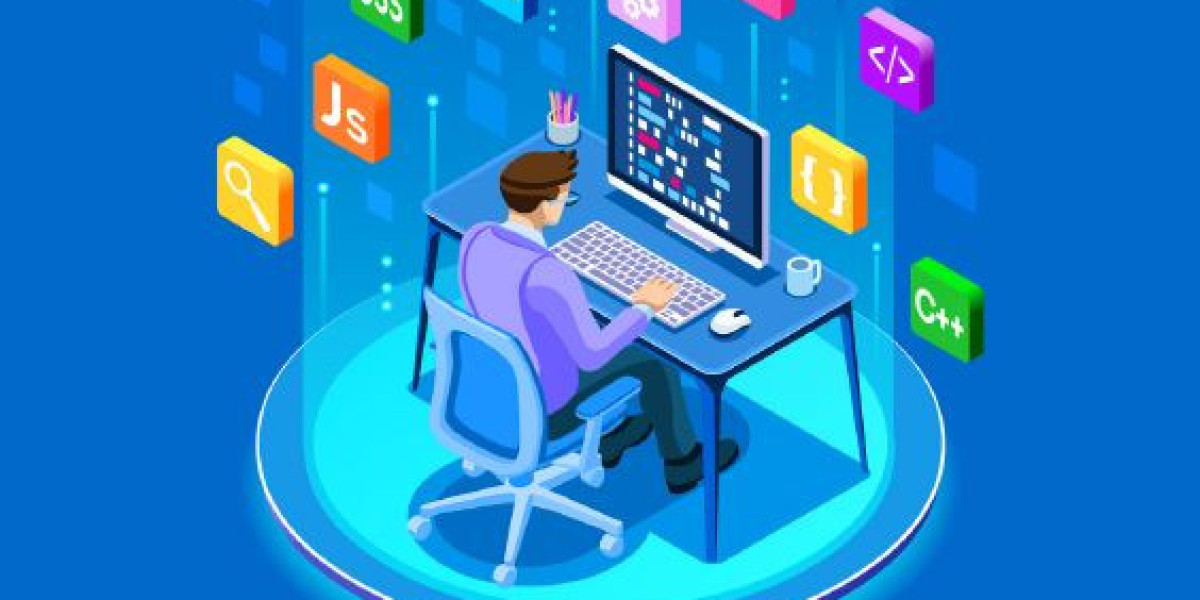

The modern industrial landscape, from sprawling automotive assembly plants to sophisticated pharmaceutical production lines, runs on a foundation of precise, reliable, and automated control. The invisible yet indispensable engine powering this automation is the advanced and ever-evolving PLC Software industry. A Programmable Logic Controller (PLC) is a ruggedized industrial computer that forms the hardware core of automation, but it is the PLC software that gives it life, intelligence, and purpose. This software is an integrated development environment (IDE) that allows automation engineers and technicians to write, deploy, and manage the logical instructions that dictate the behavior of machines and processes. It is the digital language used to choreograph the complex dance of robots, conveyors, sensors, and actuators on the factory floor. By translating human-designed logic into machine-executable commands, PLC software has replaced vast, complex cabinets of physical relays and timers, ushering in an era of flexible, scalable, and data-driven manufacturing. This industry is not merely about writing code; it is about creating the operational intelligence that underpins the efficiency, safety, and productivity of the entire global industrial sector, making it a cornerstone of the Fourth Industrial Revolution, or Industry 4.0.
The fundamental role of PLC software is to provide a structured and standardized environment for creating control logic. This is governed by the international standard IEC 61131-3, which defines five primary programming languages, allowing engineers to choose the most appropriate language for a given task. The most common and widely recognized is Ladder Logic (or Ladder Diagram), which visually resembles the electrical relay circuits it was designed to replace, making it highly intuitive for electricians and maintenance technicians. For more complex mathematical operations or data manipulation, engineers often turn to Structured Text (ST), a high-level, Pascal-like language. Function Block Diagram (FBD) allows for a graphical approach, connecting predefined functional blocks to create a control scheme, which is ideal for process control applications. Sequential Function Chart (SFC) is used to program complex, state-based sequential operations, breaking down a process into a series of steps and transitions. Finally, Instruction List (IL) is a low-level, assembler-like language. A modern PLC software suite allows engineers to use these languages interchangeably within the same project, providing immense flexibility to tackle any automation challenge with the optimal tool for the job, from simple machine sequencing to highly complex motion control.
Beyond the core programming environment, a comprehensive PLC software platform encompasses a suite of critical tools that streamline the entire automation lifecycle. A key feature is simulation. Before deploying code to a live, multi-million-dollar production line, engineers can run the program in a virtual environment on their PC. This allows them to test the logic, identify potential errors, and validate the control strategy in a risk-free setting, dramatically reducing commissioning time and preventing costly production errors or equipment damage. Another essential component is the integration with Human-Machine Interface (HMI) and Supervisory Control and Data Acquisition (SCADA) systems. The PLC software facilitates the seamless sharing of data tags between the controller and the visualization systems, allowing operators to monitor machine status, view alarms, and control processes from a graphical interface. Modern platforms also include powerful diagnostic and debugging tools that allow technicians to go "online" with the PLC, monitor the live execution of the code, and quickly troubleshoot any issues that arise on the factory floor, minimizing downtime and keeping production lines running smoothly and efficiently.
The evolution of PLC software reflects the broader trends in industrial technology, particularly the move towards greater integration and connectivity. What was once a standalone tool for programming a single controller has transformed into a comprehensive, integrated automation portal. Leading software platforms, such as Siemens' TIA Portal or Rockwell Automation's Studio 5000, are designed as holistic ecosystems. Within a single software environment, an engineer can now configure the PLC hardware, program the control logic, design the HMI screens, set up motion control for servo drives, and configure network communications. This level of integration eliminates the need to learn and manage multiple, disparate software packages, which significantly reduces engineering complexity and the potential for errors. Furthermore, these modern platforms are built with connectivity in mind, providing the hooks and protocols necessary to connect the factory floor to the enterprise level. This allows for the flow of real-time production data from the PLC up to Manufacturing Execution Systems (MES) and enterprise cloud platforms, providing the data foundation for advanced analytics, predictive maintenance, and the overall digital transformation of the manufacturing enterprise.
Top Trending Reports: